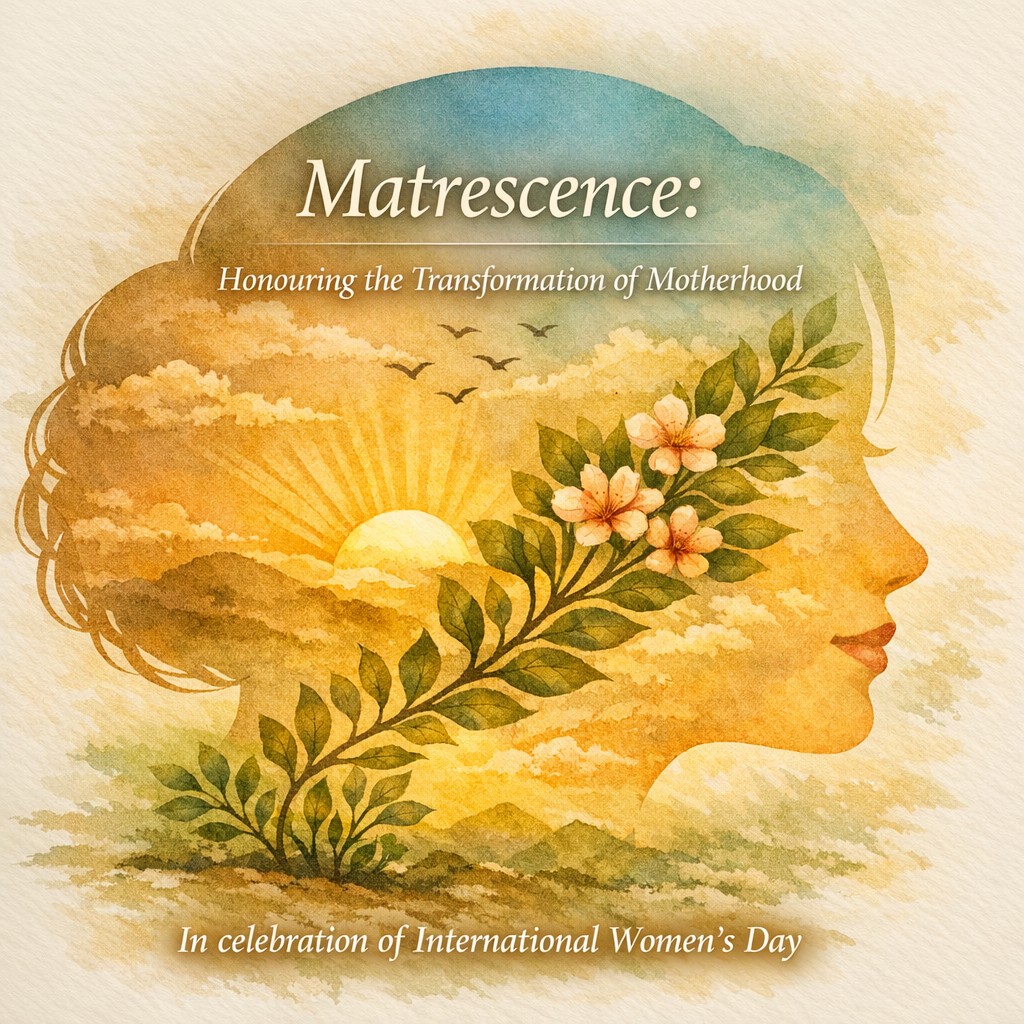
On International Women’s Day, we celebrate every mother’s journey — across cultures, languages, and life stages. Matrescence reminds us that motherhood is not a role, but a transformation. And every transformation deserves to be seen.
The journey into motherhood is often described as joyful, overwhelming, beautiful, exhausting, and everything in between. Yet there is a word – first coined by anthropologist Dana Raphael in 1973 -that captures this transition with far more accuracy and compassion: matrescence.
Much like adolescence, matrescence is a period of profound change. It reshapes identity, relationships, priorities, and the way a mother understands herself in the world. It is emotional, physical, social, cultural, hormonal, and deeply personal. And while it is one of the most significant transitions a woman will ever experience, it is rarely spoken about openly.
At Hills Montessori, we believe this silence deserves to be broken.
A Transition Worth Naming
Matrescence acknowledges that becoming a mother is not a single moment – it is a gradual unfolding. It includes:
The shifting sense of self as a woman becomes a parent
The emotional push‑and‑pull between independence and responsibility
The re‑negotiation of relationships, routines, and identity
The internal conflict between societal expectations and personal truth
The deep love and deep fatigue that coexist in early parenthood
When mothers hear this word – matrescence – many describe a sense of relief. “Oh… so it’s not just me.” Naming the experience helps normalise it. It gives mothers permission to feel the full spectrum of emotions without guilt or comparison.
As Dana Raphael reminds us, “We need words because they create worlds.”
By naming matrescence, we create a world where mothers can be understood rather than judged.
What We Learned at a Recent Montessori Conference
During a recent Montessori conference, our staff engaged deeply with the emerging research on matrescence. We explored the work of scholars and advocates such as Aurélie Athan, Amy Taylor‑Kabbaz, Dr Sophie Brock, and Lucy Jones, each of whom is helping to bring this “lost word” back into public understanding.
One idea that resonated strongly with our team is that: “The birth of a baby is also the birth of a mother”.
This identity shift is not simply emotional – it is neurological. Motherhood literally rewires the brain, shifting a woman from self to us, me to we, and maiden to mother. These changes heighten attunement and protectiveness, but can also increase sensitivity, comparison, and self-doubt – especially in a culture that often expects mothers to “bounce back” rather than transform.
Understanding this helps us support families with greater empathy, patience, and presence.
How Our Under 3’s Program Supports Matrescence
Our Montessori Parent/Child Under 3’s classes are designed not only for the child’s development, but also for the parent’s unfolding identity. In these early years, mothers in particular are navigating enormous internal change – often quietly and without acknowledgment. Our program intentionally creates space for this.
Through a calm, respectful environment, parents are invited to:
Observe their child with curiosity rather than pressure
Slow down, breathe, and reconnect with themselves
Reflect on their child’s cues and their own responses
Build confidence in their parenting instincts
Connect with other parents who are experiencing similar transitions
This gentle rhythm honours both the child’s growth and the mother’s transformation. It reminds parents that they are not alone, that their feelings are valid, and that early parenthood is not meant to be navigated in isolation.
Supporting Mothers Beyond the Under 3’s Years
Matrescence does not end when a child turns three. It continues – reshaping identity again and again as children grow, separate, return, challenge, and flourish.
As children transition into our preschool program, we continue to support mothers through:
Warm, relational communication that acknowledges the emotional side of separation and independence
Predictable routines that help both children and parents feel grounded
Gentle guidance when mothers feel unsure, overwhelmed, or worried
Opportunities for connection with educators and other families
A culture of kindness, where questions are welcomed and parents are never expected to “have it all together”
We recognise that preschool brings its own shifts: letting go a little more, trusting a little more, redefining one’s role again. Our educators walk alongside mothers through these transitions with the same respect, empathy, and partnership that guide our Under 3’s work.
Matrescence is lifelong – and so is our commitment to supporting families through it.
Why This Matters
When mothers feel supported, understood, and grounded, children thrive. A parent who feels safe to explore their own identity can better support their child’s emerging independence. This is the heart of Montessori philosophy: the development of the child and the development of the parent are intertwined.
By acknowledging matrescence, we honour the whole family. We recognise that early parenthood is not simply a role – it is a profound evolution.
A Community That Sees You
To every mother in our community:
You are growing just as your child is growing.
You are learning just as your child is learning.
You are becoming, reshaping, stretching, and discovering new parts of yourself.
And you deserve to feel seen in that journey.
Our hope is that when you walk into our classrooms – whether Under 3’s or preschool – you feel held by a community that understands the depth of this transition. That you find moments of calm, connection, and confidence. And that you know your experience – your matrescence – is real, important, and worthy of care.
Further Reading & Listening
For those who would like to explore matrescence more deeply, these authors and thinkers are leading the way: