
March 2, 2026
Our garden offered a wonderful surprise this week as the children helped harvest a banana flower, exploring its sticky pistils, rich colours and hidden tiny blooms in a hands‑on learning experience.
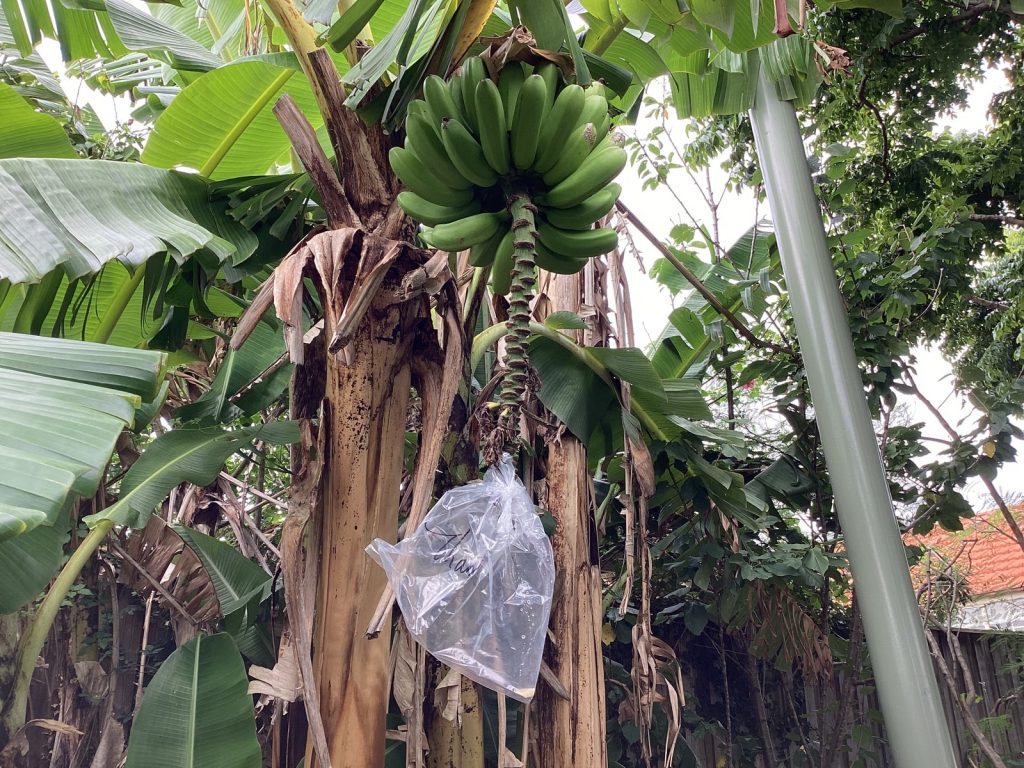
It has been quite some time since we last harvested a banana flower—our previous bunch of bananas was happily shared with the local wildlife over the long summer holidays! The children took this in stride, reminding us that our garden is a home for many creatures and that sharing is part of caring for nature.
This week, we were finally able to harvest a new banana flower, and the experience sparked wonderful curiosity and conversation.
Discovering the Banana Flower
As soon as the flower was cut, the children noticed something fascinating: sap began dripping almost immediately. To keep ourselves clean, we tied a small bag underneath to catch the sap, which the children found both practical and amusing.
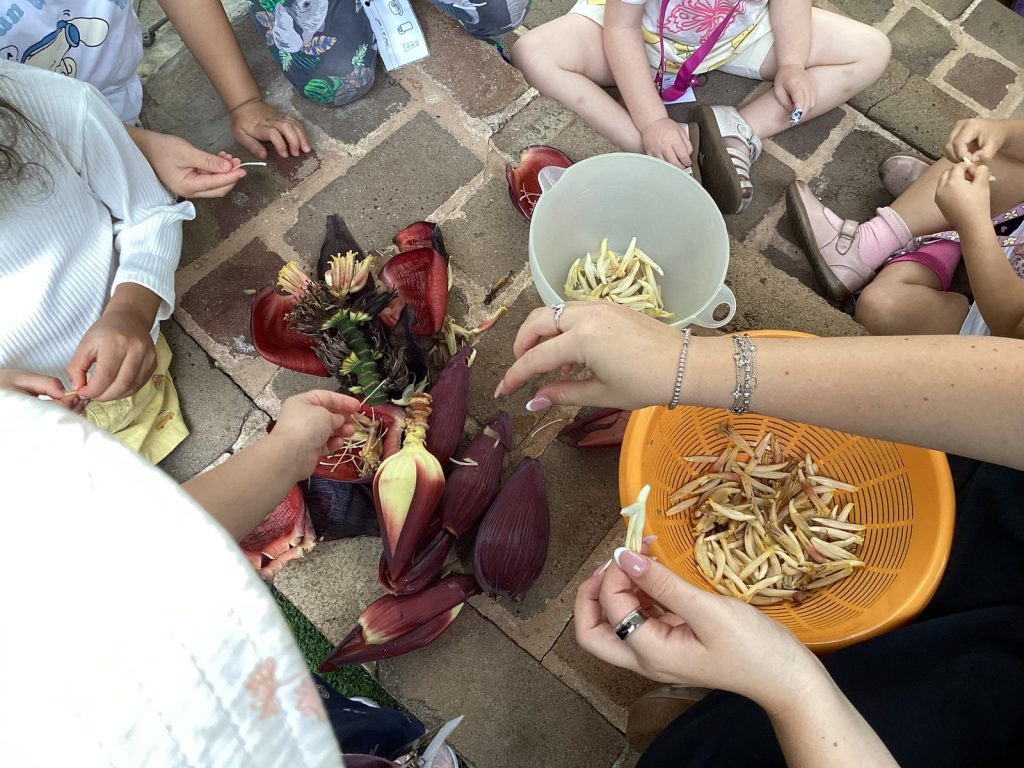
Inside the large, reddish petals were rows of tiny flowers—each containing a sticky pistil. The pistil is the only part of the banana flower that isn’t edible, so the children joined Olivia in carefully removing them.
Fine Motor Skills in Action
This delicate task became a beautiful fine‑motor activity. The children concentrated deeply as they:
Their focus and pride were evident as they worked together, chatting about the colours, textures and surprising details hidden inside the flower.
All the removed pistils were added to the compost bin, continuing our cycle of returning nutrients to the garden.
From Garden to Plate
The edible parts of the banana flower will soon be transformed into banana‑flower pancakes for the children to enjoy—a delicious way to connect the garden to the table. The children are already excited to taste something made from a plant they helped prepare with their own hands.
A Beautiful Blend of Nature and Learning
This experience offered the children:
Moments like these remind us how rich and rewarding outdoor learning can be, especially when children are invited to explore, touch, question and participate.